

The Chip on China’s Shoulder

The Century of Humiliation is not a Bargaining Chip
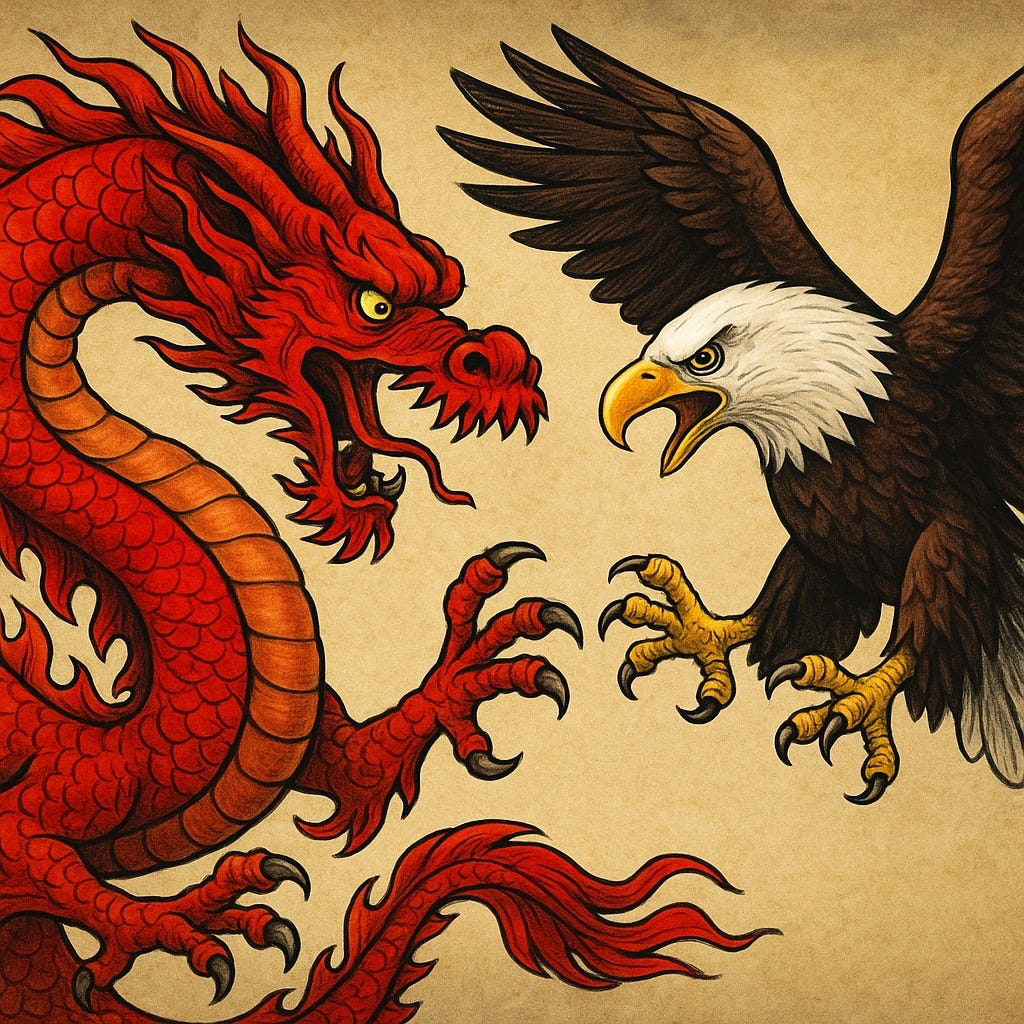
The Wall Street Journal just ran a piece on China’s top trade negotiator, He Lifeng, and the unyielding posture He has taken toward U.S. demands. I had to laugh at the predictability of it. Back in March, my foreign policy students heard this exact scenario play out in my lecture. I said: You need strategic empathy because asking China to cave in to tariffs, to US public pressure, in front of the world, is demanding they reject their Mandate of Heaven and right to govern China.
It would be like asking US President Donald John Trump to grant amnesty to every illegal alien in America, only times ten.
In this context, empathy refers to the strategic capacity of a state, particularly its diplomats and policymakers, to understand how another sovereign government sees itself, including its collective memory, and national identity, without necessarily agreeing with or validating that perspective.
Empathy here is not sentimental. It is a geopolitical tool. It means recognizing, for example, that when the government of China invokes the “Century of Humiliation,” it is not engaging in some sort of playacting; it is expressing a foundational narrative that drives its domestic legitimacy. Failing to grasp that is a strategic liability.
Empathy in foreign policy means asking:
What is the story this nation tells itself about its past?
How does that story shape its actions today?
How do our words and actions appear through their eyes, not just ours?
Without this kind of historical and cultural literacy, diplomacy becomes tone-deaf. And in an age of eroding American superiority, as other powers catch up to the US, that blindness can be fatal to peace or progress. Or a great trade deal.
Ignorance of what it means to deal with a state that obsesses over its own degradation is weakness. Empathy is a strength. The Century of Humiliation isn’t just a term in Chinese textbooks. It is the narrative that explains tariff resistance and retaliation, to military assertiveness. That narrative is not for American consumption; it is for the Chinese people. They look to their government to produce immunity from national humiliation.
What is the justification for the Chinese Communist Party (CCP) holding all political power over more than one billion people? Answer: We ended the Century of Humiliation. We ended the forcing of our people to buy opium from British gangsters backed up by the Royal Navy. We ended Russian interference. We made China strong so that the Nanking massacre will never happen again. We sent the US Army on the longest retreat in its history when they dared approach our Korean border. We made China rich so that we will never again be pushed in the dirt by racist Europeans and North Americans.
It is visceral. Asking China to accept humiliation is asking the CCP to destroy their own reason for existence. You cannot ask that of any opponent unless your intent is to destroy them, and unless they are crushed they will not agree. So there can be no deescalation that makes China look like it caved.
Putting too much public pressure on the government in Beijing only confirms their fear that foreign hegemons still aim to dominate, not negotiate. That Europeans and Americans demand the acceptance of their supremacy and you China, must accept disrespect. No one will get a good deal for America by asking the People’s Republic of China to yield under visible, international, American-led pressure. It would be political suicide, just as it would be unthinkable for President Trump to appear soft on immigration and start granting amnesty to millions.
Political legitimacy built on narratives of defiant grievance cannot afford to look weak regarding their base narrative. For China it is literally humiliation that is their core, just as immigration is driving the American and European Right.
So if the Americans want anything more than posturing and impasse, they will need to engage with the narratives that define national honor for other independent powers. A common failing of movements and political causes rooted in chauvinistic prejudice is demanding respect for itself and denying it to others because they desire performative mastery not peace or equality. That will not fly with China; it is both too strong and has too much to lose.