

America is Acting Like a Third World Country With a First World Military. We Are Getting Played.
November 21 AD2025

The November 22 edition of The Economist leads with the article “Welcome to Anything Goes America: Where the loosening of rules and tolerance of corruption will lead.”1 It argues that there has been a moral and institutional collapse around treating corruption as clearly negative and wrong, because partisan polarization has dulled the political cost. No one polices their own side; Republicans and Democrats point fingers only at the other side. Many voters, who have no memory of what systemic corruption does to a country, then conclude that partisan hypocrisy means no one should be punished. The context is gone, and the consequences will not be recognized until a public catastrophe wrecks American lives.
Already this is a problem. Americans have been insulated from global opinion because of their power, but that insulation is slipping in both relative and absolute terms. This means that, more than at any time in a generation, Americans need the world to think well of them. Declining esteem for Americans and their government will ultimately make it harder for the USA to strike favorable deals and attract the talent that once made the global brain drain a net benefit. Some Americans may consider what was previously unthinkable —leaving the New World— and a reverse brain drain could happen. A $30 trillion economy can absorb a great deal of misrule, but when the key business question becomes “Do you know the president?” capital will misallocate on a massive scale.2 Firms that should lose will win. Firms that should win will stall. It will handcuff the invisible hand to the Oval Office. Over time this degrades American competitiveness and resilience.
It matters that government now occupies a larger share of the US economy and is more corrupt than before. Its behavior is of greater consequence for the average American. It also matters that the country is deeply in debt and that the self-described conservative party is opposed both to a balanced budget and to serious cuts in defense spending. Inflation, plus interests on the debt eating up more of the budget is going to kill the ability of Americans to invest in the future. All these factors will change the way the world reacts to America.
The Economist is not just describing another round of American political corruption. It is signaling a fundamental decay of institutional integrity, a shift toward making transactional governance normal across the whole system. By transactional governance I mean a way of running government where official decisions are treated as private deals and trades, not as duties owed to the public. That is the core insight. The presidency of the United States, and the wider federal apparatus that orbits it, are being treated as assets to be exploited. For the rest of the world, this is not a moral curiosity. It is a built-in weakness inside the largest economy and the most powerful military on earth. This is end of American exceptionalism. The actions of the US government have become what some call “third-world coded.”
For core US allies—the United Kingdom, Canada, Australia, New Zealand, Japan, South Korea, and the major European states—the reality is blunt. They must ruthlessly diversify their foreign relations. That means hedging between the US and China, not simply following Washington. It may mean seeking greater autonomy through a rearmed Europe. But a militarily stronger Europe will not be a compliant Europe, rather, it would be much more assertive and would act in its own interests and not in America’s. While MAGA has viewed the security umbrella in transactional terms where Europe is thought to be taken advantage of the USA, the reality was that the American protection of Europe meant that the Americans set the terms of engagement. That is being surrendered with no gains to the American people.
Europe can see that US security guarantees, trade access, and diplomatic support can no longer be treated as treaty-backed constants. They are contingent on presidential whim and, in some cases, on the prospect of personal or familial enrichment. Allies should assume that nothing is settled until it is documented, and even then it is provisional and may be changed. So get the ink on paper, but then you cannot trust the paper? Sovereign states and blocs will play that game for a little bit but they take out an insurance policy against you. They will accelerate the construction of parallel structures: European strategic autonomy and deeper intra-Asian security ties. The United States is still an “ally” and all alliances are conditional, but before they were conditional based on shared interests, now they are based on personal benefits and that is untrustworthy. All of this is threatening to the United States and is driven by the anti-realism of a new elite, currently resident in the USA, who refuse to look at the world as it is rather than as their personal interests make them wish it to be. They are, in that sense, fundamentally un-American in their mores and historical knowledge. The habits that rule are not the habits that made America great, they are the behaviors that millions of Americans’ ancestor fled to get away from.
Over the longer term, allies should be expected to treat the United States as a declining hegemon, even as it appears to remain the most powerful single actor. And even when it is no longer the most powerful, expect them to flatter America and pretend that it remains indispensable while they quietly dispense with it. That includes reducing their sharing of critical intelligence. You never know when your ally withholds information if you do not have their info to begin with, and you cannot make people tell you their secrets. America should prepare to get ghosted.
For neutral governments such as India, Brazil, and Indonesia, a transactional America is a chance to profit from the gap between ideals and practice. When everything is negotiable, this is the moment to extract maximum concessions. Washington is signaling that what matters most is not shared values, but access, flattery, and deals that directly advantage the rulers even when they sellout the American people. The lack of coherent institutional memory or grand strategy in Washington creates space for duplicity. The American vice president is especially guilty of incoherent strategic thought and posturing. Even more than US allies, neutral states can play all sides, maintaining or even deepening relationships with China and Russia while feeding the United States symbolic wins and photo opportunities. So long as those wins flatter the White House and feed the narrative of American primacy, the underlying reality of hedging and diversification may be tolerated or ignored. Strategically, this environment favors agile middle rank powers with fewer commitments. Their goal would be to build leverage through economic ties that make a country too valuable to push aside, without ever depending on US security guarantees.
For rival governments in China, Russia, Mexico, Cuba, and North Korea, The Economist article is a gift. It confirms, in the voice of the West’s own elite media, that the presidency and the wider American state are debased. There are two options: push America over the brink or act like everything is fine and let the Americans ruin themselves. On the one hand it makes sense to accelerate campaigns that attack American legitimacy. It works to use state media, social media and international forums sell to your own and foreign audiences the line that America is a broken, immoral society. It undermines any American criticism of you. But it risks waking America up to the risks. However, keeping quiet also runs the risk America recovers before it does itself too much irreparable harm — much harm has already been done to America’s relationship with the Canadian people regardless of what the Canadian government says — so American rivals will have to use their opportunities wisely. China likely chooses the second strategy—why interrupt your enemy when they are destroying themselves? Russia, having less to lose and more to gain from chaos, may choose the first. This divergence in approach will shape global instability over the next decade.
China has a particular opportunity. Beijing can frame the contrast as “corrupt but competent” versus “corrupt and chaotic.” Both systems have flaws, but one delivers infrastructure, growth, and basic order, while the other treats regulatory decisions as contingent on whether a leader’s family benefits. Belt and Road projects can be marketed as stable institutional commitments compared to a Washington where firms quietly ask whether Trump will sign off if they buy his cryptocurrency or rent his properties. China appears to the nationalist country of the future, it is the US that is led by Temu nationalism.
All rivals will read this as a green light to push at the edges of what they can get away with. A transactional and distracted US leadership is less likely to respond decisively to small land grabs, hacks and online attacks, and quiet campaigns to sway public opinion and politics that fall below the threshold of open conflict. The signal is that Washington’s attention and will are for sale. That is an invitation to test the limits.
The end of the Post 9/11 Middle East
For Middle Eastern powers, already masters of transactional statecraft, this is familiar terrain with unprecedented upside. The United States has descended to their level of governance while retaining superpower capabilities. That is the core reality. They can work with that. Some better than others.
Turkey sits at the center of this shift. President Recep Tayyip Erdoğan is uniquely positioned to exploit a corrupt, personalized superpower. He understands strongman politics, has no real attachment to liberal norms, and already runs a hybrid regime that mirrors what America is becoming. His play is to work all sides at once: accept F-35 components while purchasing Russian S-400s. Turkey’s leverage is structural. It controls Incirlik Air Base and the Bosporus Straits. In a transactional America, these are not sacred NATO obligations. They are negotiating chips. Over time, Turkey will want to become the state that holds the balance of power in Eastern Europe and the Mediterranean and it is plausible that, over the next decade, Turkey moves from being a flawed NATO ally like Hungary and into something more challenging: a de facto non-aligned power that still sits inside NATO’s shell, and may even test formal exit if the price is right. In this environment, Turkey wins the most. Erdoğan’s entire career has prepared him to deal with a transactional superpower. The sultan is game and ready to play.
Israel, by contrast, is drifting into a complacency trap. Israeli leaders assume unconditional US backing because of evangelical influence, the support of media moguls and AIPAC’s long standing relationships in Congress. That is now a dangerous assumption. Young America is not enamored with Israel even among many conservative Christians. Prime Minister Bibi Netanyahu likely believes that he has Trump locked in through personal rapport and shared donor networks. Even in a transactional America, Israel is not just another client. But ability of American leaders to keep exploiting their new regime of lawlessness requires at least some form of control over the GOP and if Israel is seen as threatening their hold over the right-wing, Israel may have cause to worry. Additionally the GOP’s leadership has provoked massive anger, shame, and resentment. The closer Israel is tied to a particular American political faction or party, the more Israel alienates the other. Israel and its supporters in the US will need to quickly cultivate new leaders, and lift up alternative voices that can speak to why American nationalists would want to maintain a relationship with Israel. Leaders who can create space for thoughtful conversations about Israel everywhere from college classrooms, to church conferences. Depending on the current US administration to get the rising generation of Americans on board with the Washington-Jerusalem partnership is a bold and unwise strategy.
The trajectory is bleak. Israel continues maximalist policies in the West Bank and Gaza under the assumption that US cover is permanent. A crisis comes: a regional war, a moment when Iran is close to a usable nuclear weapon, or a civilian casualty event that shocks even Republican voters. Trump will ask what is in it for him to stand firm. The evangelical base is weaker than Israeli strategists want to believe, and Trump has shown no durable loyalty to any constituency that cannot directly enrich him. The real risk is not open rupture but a sudden shift from automatic backing to hard, transactional conditions. In a crisis, that will feel like abandonment on the ground even if formal aid lines remain.
Saudi Arabia understands the new rules intuitively. Crown Prince Mohammed bin Salman has already signaled that he knows how to play this game. The $2 billion investment into Jared Kushner’s fund was not charity. It was a down payment on a long-term transactional relationship. Riyadh will structure every major interaction with Washington as a business deal: Trump hotel licenses, crypto ventures, LIV Golf sponsorships, and media investments. The goal is to make the Trump family personally wealthy from the Saudi relationship and therefore personally invested in Saudi interests.
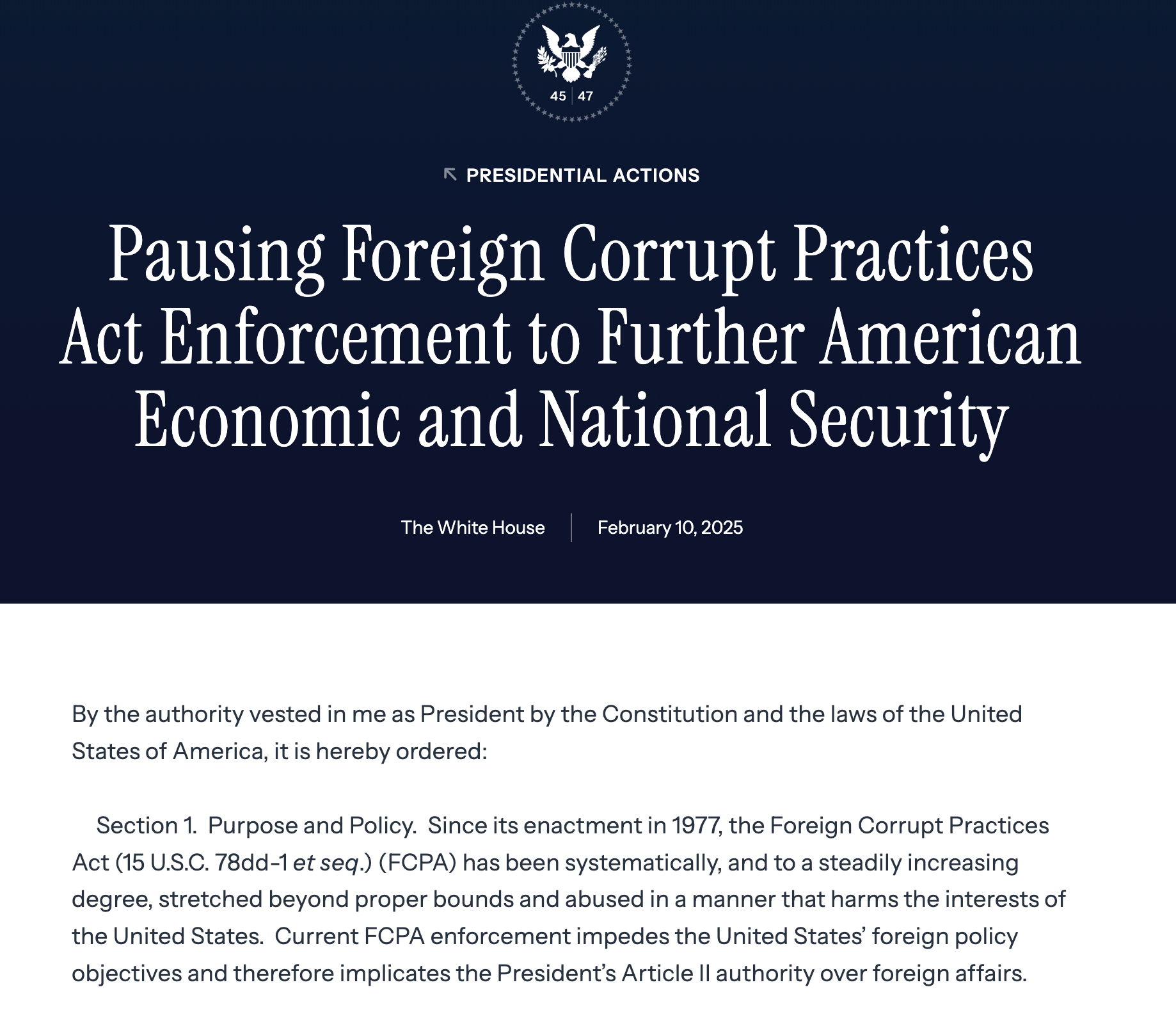
On nuclear issues, the message is that non-proliferation rules are negotiable if the price is right. Saudi Arabia can offer Trump a “historic” civil nuclear deal that allows him to claim statesman status while Riyadh acquires technology and infrastructure that can be repurposed for weapons. Bombs for them and not for Iran will be the whispered offer. No need to state such a thing in public. On Yemen, the bet is that Washington will look away from war crimes as long as the checks keep clearing. A gutted public-integrity apparatus and a shelved Foreign Corrupt Practices Act mean that those who wish to play fast and loose with the rules will be very tempted to do so.
It would make sense for Saudi Arabia to market itself as America’s primary Middle East partner, with the simple slogan: we pay, they cost. Saudi Arabia is the second-largest winner after Turkey, precisely because Mohammed bin Salman (MBS) grasps that money now outweighs democratic allies’ strategic arguments. He has spent years proving that the Western elite is morally hollow and that he can in fact buy them. He does not need to respect them, he only needs to know their price. From golf, to boxing and now pro-wrestling, MBS is deliberately forcing Americans to share their pastimes with Saudi Arabia; WrestleMania 43 will take place in Riyadh, Saudi Arabia, in 2027, marking the first time the event will be held outside of North America. While Israel grabs headlines, MBS is winning boardrooms and this week triumphantly met with President Trump in the White House.3 Saudi isolation is dead; MBS has taken advantage of American permissiveness to defeat all his detractors. Those who screamed about “Saudi blood-money” cannot avoid it because Saudi cash is flowing throughout the US economy.
Egypt enters this environment from a position of weakness. It currently receives roughly $1.4 billion in annual US military aid, a legacy of the Camp David Accords that has been treated as untouchable. In transactional America, nothing is untouchable unless someone is paying protection money. President Abdel Fattah el-Sisi must shift from viewing US aid as an entitlement to seeing it as a subscription that requires renewal fees. Egypt will have to make itself useful to the new US order and control over Suez is not enough when the US leaders have not been shy about threatening weaker powers with interventions, and Egypt is most certainly the weakest of the five Middle Eastern powers. Egypt has to punch above its weight using geography, Gaza leverage, the Suez Canal, and anti-Iran positioning, because it cannot outbid its rivals. The danger of abandonment is high.
Egypt and Turkey’s competition will likely get worse as they compete over influence in Gaza, Libya, and the Eastern Mediterranean.
For Iran, like Russia 2025 has been a year confirmation that the Great Satan is corrupt and hypocritical. But that does not help Iran at all. The privilege of feeling smug about America will not defend your airspace as they found out earlier this year. President Trump has no deep commitment to regime change. Everything is negotiable if it can be sold as a personal triumph. Iran’s problem is, well itself: resentment, capacity and timing. Pro-Israel Americans have spent a generation obsessing over the Iranian nuclear program and Iran has done little to nothing to reduce the perception it is a threat to America as well as Israel. Additionally, sanctions, the absence of a sovereign wealth fund, and internal political constraints limit Iran’s ability to compete with Gulf states in buying American favor.
Does the Iranian regime have the strategic intelligence to know when to quit and make a deal? It may match America for strategic lack of awareness. Iran should offer the US another “historic Middle East Peace deal” to avoid being left in the cold while its rivals strike new agreements. And it has to try to keep itself out of the firing line of the US should the administration need to hit a foreign power to send a message or placate a domestic audience.
The new rules are simple and brutal. The world has dealt with corrupt powers before. What makes this moment unprecedented is the combination: first-world military capabilities paired with third-world governance patterns. Immense destructive power matched with transactional, personalized decision-making. Foreign governments are preparing for that reality. Americans should too.
Capital misallocation occurs when market failures, government intervention, or institutional factors cause capital to flow inefficiently rather than to its most productive uses in the real economy (the production of actual goods and services). In corrupt or transactional systems, political connections replace economic merit as the primary driver of investment decisions, directing resources toward politically favored but economically inefficient firms and projects, which degrades overall productivity and competitiveness.