

After Visiting the German Military Cemetery in Normandy I Am Convinced Our Kids Would Do It Again

Dear Readers,
I’ve been on our side of the Atlantic for three days, and I am happy to report that if we do our best to help them along, America’s youth will be alright. They get it. They have seen the consequences of unseriousness in American politics and culture, and they do not like it.
As part of our trip to Normandy, they visited three military cemeteries and several older graveyards, usually attached to a church or abbey. But of the military cemeteries, it was the German cemetery that gave them the most disquiet. “Why are we here?” “What should we think of this place?” These were American high schoolers, and they showed more circumspection than Congress.
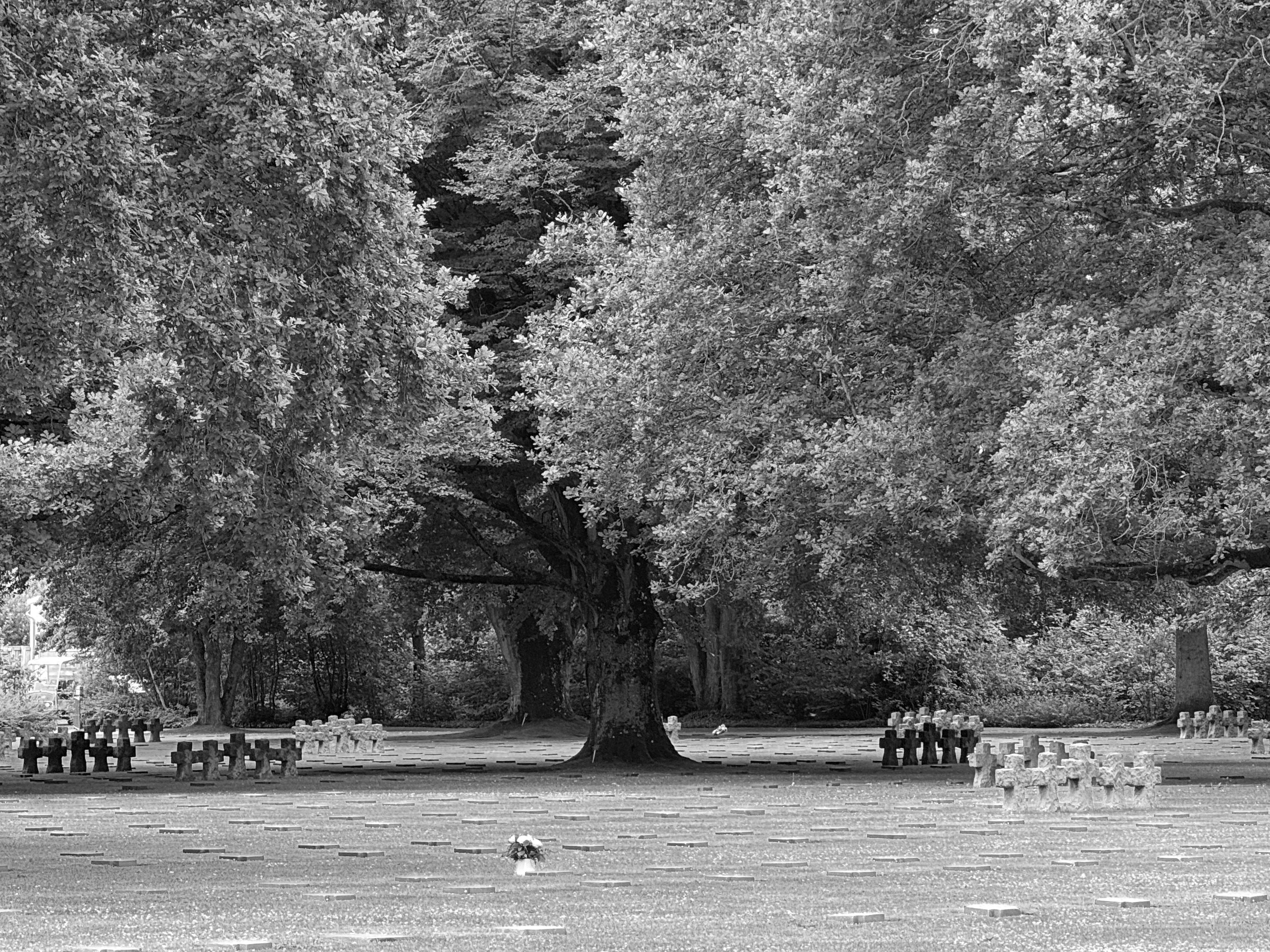
They walked the grounds of the German War Cemetery at La Cambe, maintained and operated by the Volksbund Deutsche Kriegsgräberfürsorge, a private organization because the Federal Republic of Germany is not the successor to the Third Reich and does not maintain Nazi-related military cemeteries. The Volksbund Deutsche Kriegsgräberfürsorge began after the Great War, but the Second World War was a much more complicated war to remember. For the first decade after the defeat of the Nazis, the French maintained the cemetery—or rather, they managed it. It was a lot to ask of a France that had been occupied, bombed, and fought over during the war to expend its limited resources on maintaining the graves of the invader, which included the graves of Nazi war criminals. It languished in disrepair, some would say deservedly so. Its wooden crosses peeked through an overgrown field. When the Volksbund Deutsche Kriegsgräberfürsorge took over, it had to tend the grounds, replace the grave markers with stone, and remove and reinter thousands of dead German soldiers.
It was tough. Controversy surrounded it then, and it still does: who funded the burials, why, and who ensures it doesn’t become a neo-Nazi shrine? These questions are still asked in 2025. The memory of the war is alive in Normandy, where there are six German war cemeteries and La Cambe is but the largest.
We, Americans and our wartime allies, never accepted the surrender of the government of Nazi Germany; rather, we accepted the surrender of the German armed forces, the Wehrmacht. After Hitler committed suicide, Admiral Karl Dönitz became German President, with Lutz Graf Schwerin von Krosigk as the leading minister. This change of personnel was rejected by the Allies; no surrender of the Nazi government was acceptable. Instead, with Winston Churchill as one of the main proponents, Germany was declared to be a conquered condominium with no government of its own and ruled by the conquering Allied powers. If a Nazi government were to suddenly reappear, it would automatically be at war with the United States, and therefore adherence to Nazism could arguably still be seen as treason. Nazism was so distasteful to Churchill and the other Allied leaders that its government was simply declared to have ceased to exist by force of arms. Dönitz was dealt with as an admiral and nothing more. Even the Empire of Japan, still at war with the Western Allies, formally withdrew its diplomatic recognition of the Dönitz “government.”
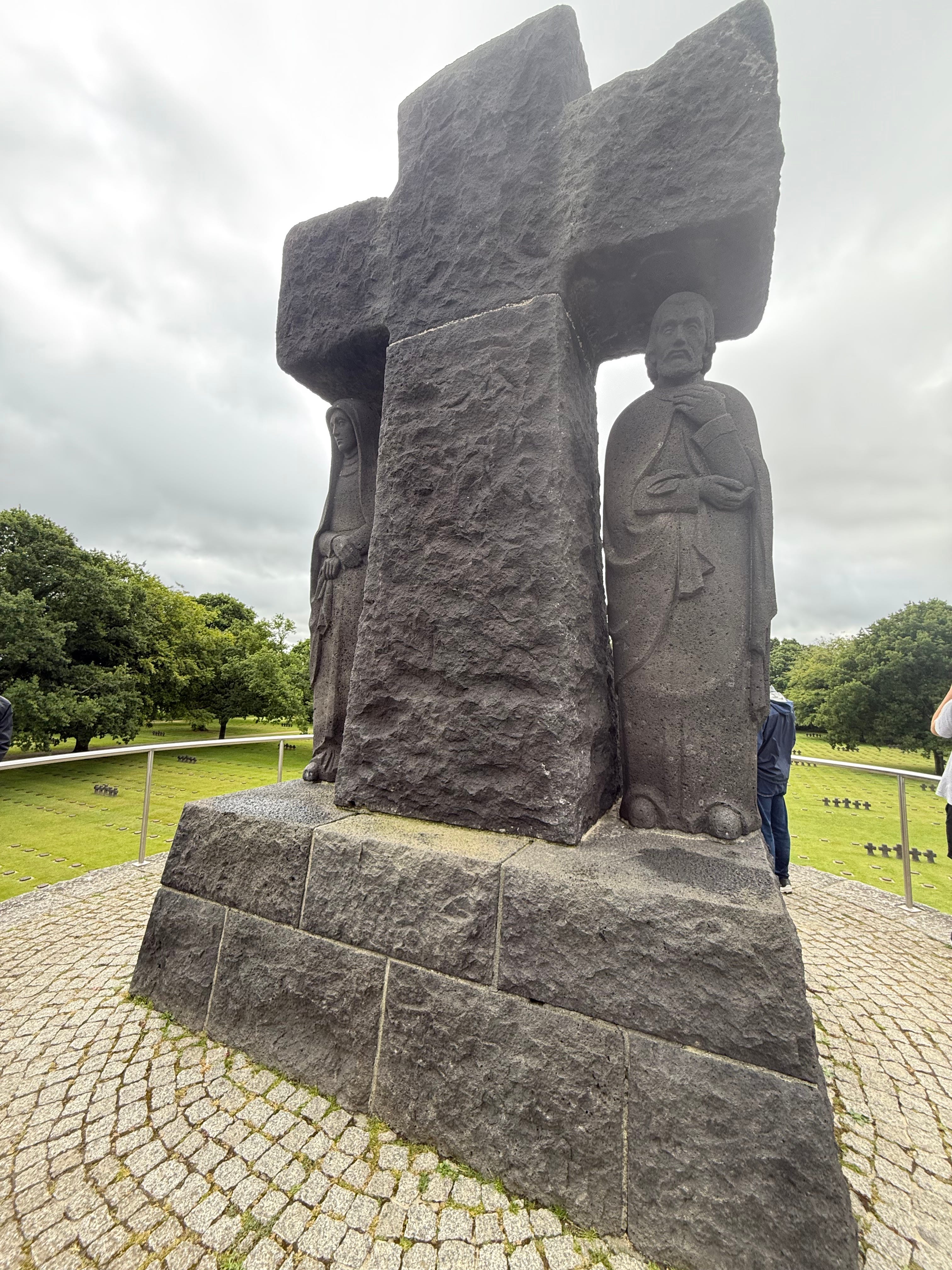
I climbed the steps to the mound in the center of the site with students still musing and professors pondering. But I walked with a purpose. We reached the top, and I got their attention and pointed to the graves: “This is the only monument to Adolf Hitler—unnecessary dead Germans. And you, young Americans, must be resolved that if something like this were to happen again, you would put every one of them right back in the ground.” They nodded, they smiled, they became more serious, and all agreed. They would absolutely put the enemies of America down.
Adolf Hitler was the greatest enemy of the German people. He destroyed a generation with his lies. He took them, by choice, into a war with resolved Americans. He abandoned them to the Communists. He covered them with shame. If you go back to Charlemagne’s coronation as emperor by the Pope in AD 800 and treat that as the start of a German history in the Holy Roman Empire, Germany is 1,200 years old, of which the 12 years of Nazi rule is only one percent. One percent! German history has been reduced to just the one percent. Here in Washington, D.C., I have met German officials who viewed me with suspicion for suggesting that Germans are more than the Nazi era and that they should recover their sense of self and ability to engage the world from a German perspective, given their long history and old culture. They thought I was crazy and that Germany had nothing to offer the world because of the Nazi era. That is Hitler’s legacy: a Black American historian telling Germans they are more than their darkest moment and being told, “No, we are that and have nothing to offer.” Yes, I have had some interesting experiences trying to be the nuanced voice of reason. It is not always welcome.
But that war was won by Americans. And young Americans today—traditionally liberal young Americans, especially the young men who went on the trip—would not hesitate to put the fascists in the ground, six feet deep. I saw resolve in their eyes. These young men and women, spent half a year studying the Normandy campaign. They know the sacrifice required. They read the letters of Americans asking for news of their fallen loved ones. They cried as they remembered the fallen father who never saw his daughter born three weeks after he fell liberating Normandy from despair. They choked-up thinking of the sons who would never taste their mothers’ cooking again or twirl their little sisters around. They get it. And because they get it, they intend to keep on being free Americans, and they will fight to secure their liberty. If we give them a fair chance and act like the adults we are supposed to be, the kids are going to be alright.
“This is the only monument to Adolf Hitler—unnecessary dead Germans. And you, young Americans, must be resolved that if something like this were to happen again, you would put every one of them right back in the ground.”
Again it is fascinating and interesting article..