

Abraham Lincoln joined the fight
Monday Memo 5/4/26

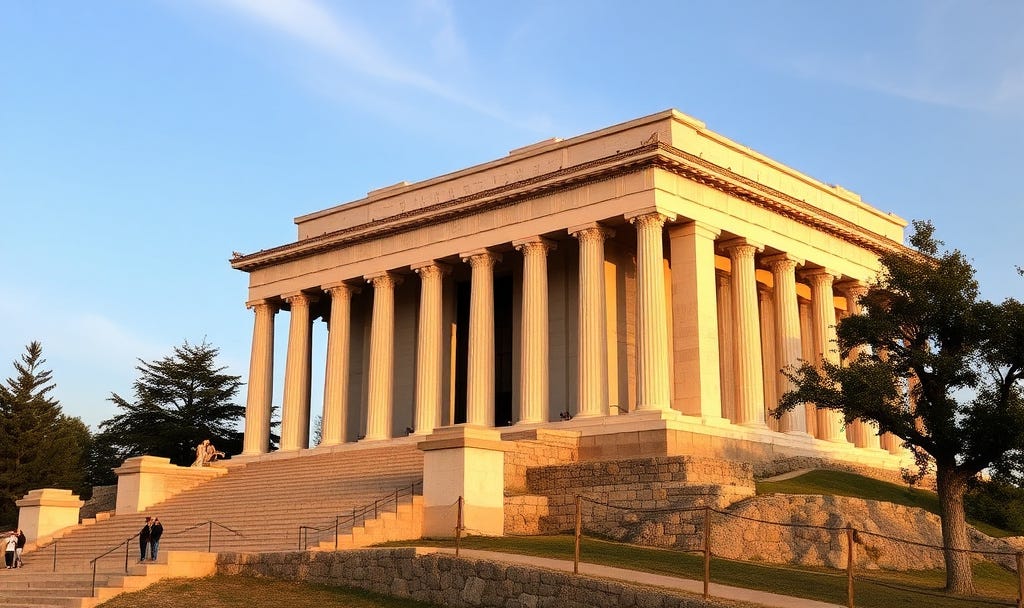
It is finals week so I will keep this a bit shorter than normal.
Perhaps my favorite lesser known Abraham Lincoln speech is the one he gave in 1859 in Wisconsin where he laid out his vision for America to fight classism and educate the working classes. This was Lincoln gearing up for a fight and at his most encouraging. Lincoln had lost the US Senate race in Illinois the previous the year, and after his notable debates with Stephen Douglas, people began to talk about him as a presidential candidate.
Lincoln was not resting on his laurels. In Wisconsin he decided to wake up his party—the new Republicans—and his country regarding capital, labor, and the mud-sill theory threat.
Lincoln challenged the mud-sill theory that society required a reliable and permanent underclass that would serve as the “mud-sill of the elite who would create civilization on the backs of others. Lincoln countered that this was unnatural because each person had hands and a head which were created to work together for the individual and not a collective. He envisioned a progression where a penniless beginner works for wages, saves a surplus to buy tools or land, and eventually becomes an employer. Social mobility was a packaged deal of true liberty.
Lincoln was opposing a corrupt oligarchy that was usurping the institutions of the USA to make them more compatible with slavery. In doing so he asserted the value and worth of the working class and their labor:
But another class of reasoners hold the opinion that there is no such relation between capital and labor, as assumed; and that there is no such thing as a freeman being fatally fixed for life, in the condition of a hired laborer, that both these assumptions are false, and all inferences from them groundless. They hold that labor is prior to, and independent of, capital; that, in fact, capital is the fruit of labor, and could never have existed if labor had not first existed -- that labor can exist without capital, but that capital could never have existed without labor. Hence they hold that labor is the superior -- greatly the superior -- of capital.—Abraham Lincoln, Sept, 1859.
It seemed hard to oppose them, and they had just won the Dred Scott verdict a few years earlier, but Lincoln knew that speaking out and displaying opposition were weapons against the “inevitability” of the Southerners, the idea that they would impose their will on the whole country. By intellectualizing manual labor and promoting the fluid movement from wage-earner to employer, Lincoln transformed a period of judicial defeat into a rhetorical foundation that empowered a new citizenry to dismantle the very institutions of oppression that the Supreme Court sought to protect.
We can all learn from Lincoln’s ability to endure setbacks at the Supreme Court and beyond. He went on the save his country and free millions of slaves. Let’s keep this in mind as a little encouragement to start the week.
More to come on Lincoln and his opponents in context.
Interesting perspective concerning Lincoln. He seem to be misunderstood especially after he allowed Kansas to decide to enter as a slave state.